We use cookies to make your experience better. To comply with the new e-Privacy directive, we need to ask for your consent to set the cookies. Learn more.

Caution Mind Your Head Signs
£3.99
In stock
SKU
HZ049G*
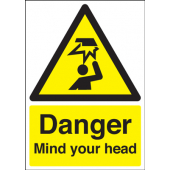
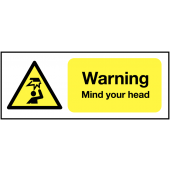
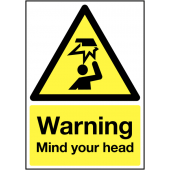
Caution Mind Your Head Signs are used for being displayed around areas where it is needed to warn people about the dangers posed from any overhead hazards and conveys the message "Caution mind your head" in bold black letters on a vibrant yellow background to provide a clear, highly visible mind your head caution message.
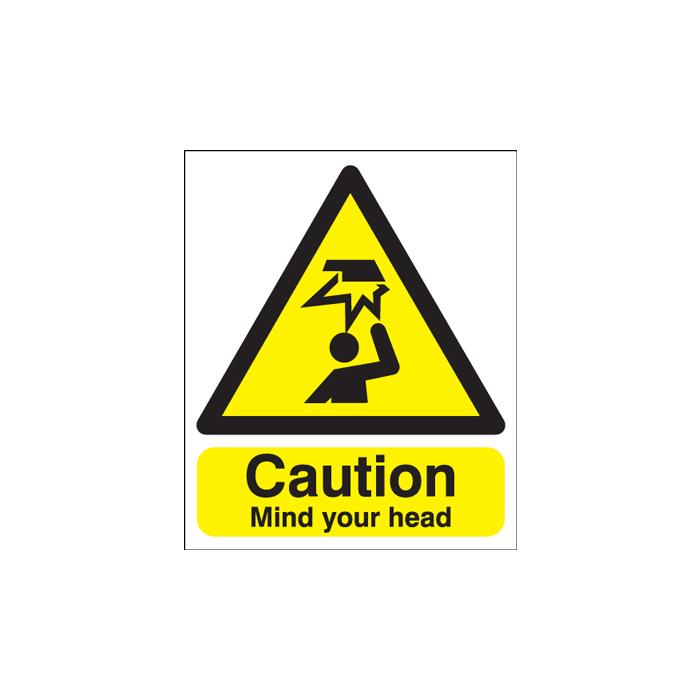
Caution Mind Your Head Signs
Caution Mind Your Head Signs are designed to enhance safety awareness and prevent head injuries in various settings. These signs are a crucial visual reminder effectively communicating the need for caution and heightening awareness of low ceilings or overhead obstructions that may pose a risk to individuals' heads.
Caution Mind Your Head Signs feature bold text and easily recognisable symbols ensuring immediate recognition and understanding. By prominently displaying these signs in areas with low clearance such as doorways or low-ceilinged spaces you can effectively alert individuals to potential hazards and remind them to be mindful of their surroundings.
Constructed from high-quality materials, Caution Mind Your Head Signs are designed to withstand various environmental conditions and maintain their visibility over time. Whether exposed to sunlight, moisture or high-traffic areas our Caution Mind Your Head Signs remain clear and legible ensuring their effectiveness and longevity in promoting safety.
One of the significant benefits of Caution Mind Your Head Signs is their versatility and adaptability. These signs can be easily mounted on walls, doors or any other appropriate surface making them suitable for a wide range of environments such as construction sites, warehouses or public buildings. By placing these signs strategically, you create a safer environment reducing the likelihood of head injuries and promoting a culture of safety consciousness.
A Caution Mind Your Head Sign is a hazard warning message type of caution sign which is seen used and displayed around areas where it is needed to warn people about the dangers posed from any overhead hazards and Caution Mind Your Head Signage conveys the message "Caution mind your head" which means to provide a caution message to others about the hazards above the head. Warning people to mind their heads around multiple areas can be completed with mind your head pack of 6 signs and where head protection must be worn displaying head protection signage will ensure people wear head protection in dangerous areas.
Caution Mind Your Head Signs Specifications
- View our complete range of overhead hazard warning signs
- Display area Indoor and Outdoor
- Colour - Background Yellow
- Colour - Text Black
- Features - Write On No
- Finish High gloss
- Orientation Portrait
- Photo luminescence? Non Luminescent
- Shape Rectangle
- Sign/Symbol Overhead Obstruction
- Sign Text/Symbol Symbol and Text
- Sign Type Hazard
- Supplied in Single
- Text Caution Mind your head
- See the full range of mind your head warning signs
- As you are looking for mind your head warning signage you may also be interested in the Danger Overhead Hazard Signs
- A similar choice of signage for overhead hazards are the Danger Mind Your Head Signs 6 Pack
- View more choices of mind your head signs