We use cookies to make your experience better. To comply with the new e-Privacy directive, we need to ask for your consent to set the cookies. Learn more.

Danger Trip Hazard Sign
£7.25
In stock
SKU
HZ171A5*
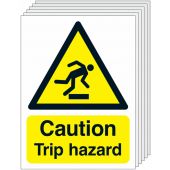
Danger Trip Hazard signs are used for being displayed around areas where people need to be warned about any trip hazards and conveys the message "Danger Trip Hazard" in bold black letters on a vibrant yellow background to provide a clear, highly visible Trip Hazard danger message.
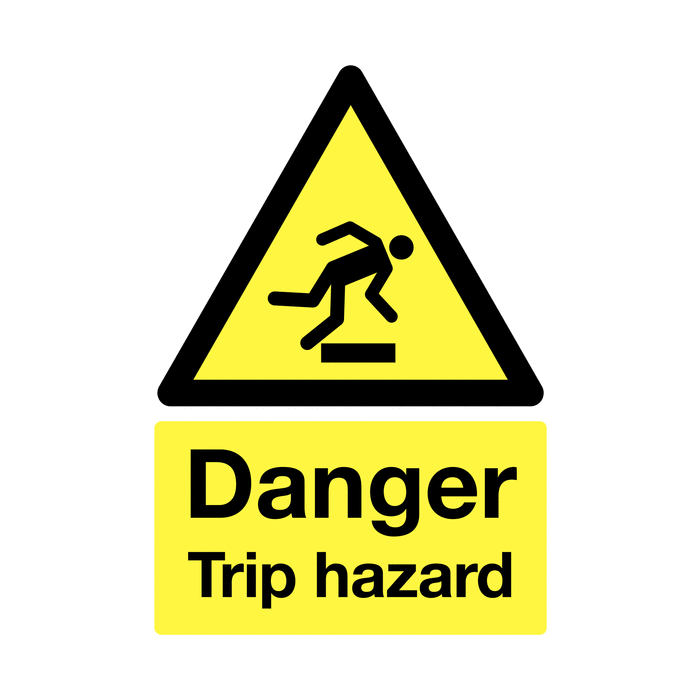
Danger Trip Hazard Signs
Alert employees and visitors to potential hazards with Danger Trip Hazard Signs. These signs play a crucial role in preventing accidents and promoting safety in the workplace. By highlighting areas where tripping hazards may be present these signs help mitigate the risk of injuries and create a safer environment for everyone.
The primary benefit of Danger Trip Hazard Signs is their ability to draw attention to areas with potential dangers. Whether it's uneven surfaces, cables or obstacles in walkways these signs serve as a visual warning, reminding individuals to exercise caution. By identifying trip hazards you empower people to be more mindful of their surroundings and take appropriate measures to avoid accidents.
By prominently displaying Danger Trip Hazard Signs you foster a safety-conscious culture within your business. These signs demonstrate your commitment to the well-being of employees and visitors showing that you prioritise their safety. When individuals see these signs consistently throughout the workplace they become more aware of potential hazards and are more likely to adopt safe behaviours such as watching their step and reporting any issues.
Another benefit of these signs is their role in reducing liability and preventing accidents. By proactively warning individuals about trip hazards you demonstrate due diligence in providing a safe environment. Should an accident occur despite the presence of these signs they can serve as evidence of your efforts to mitigate the risk. This can help protect your business from legal implications and costly lawsuits.
Danger Trip Hazard Signs promote efficiency by preventing disruptions caused by accidents. Tripping hazards can lead to injuries, resulting in absenteeism and productivity losses. By proactively addressing these hazards through signage, you minimise the occurrence of accidents keeping your workforce healthy and productivity levels high.
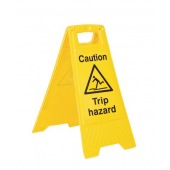
A Danger Trip Hazard sign is a hazard warning message type of information sign which is used for being displayed around areas where people need to be warned about any trip hazards and conveys the message "Danger Trip Hazard" which means to warn of the dangers from any trip hazard present in the area. For warning others of any trip hazards outdoors the Caution Trip Hazard Stanchion Sign provides and ideal solution which can be simply displayed inside a stanchion to warn people of trip hazards and where there are trip hazards inside the workplace of office the Multi Compartment Snap Fit Cable Protectors are an ideal solution for housing cables which cross walkways to help prevent people tripping.
Danger Trip Hazard Warning Signs Specifications
- View the range of trip hazard signs
- Ensures compliance under the latest signs & signals regulations
- Display area Indoor and Outdoor
- Colour - Background Yellow
- Colour - Text Black
- Features - Write On No
- Finish High gloss
- Orientation Portrait
- Photoluminescence Non Photoluminescent
- Shape Rectangle
- Sign/Symbol Trip Hazard
- Sign Text/Symbol Symbol and Text
- Sign Type Hazard
- Supplied in Single
- Text Danger Trip hazard
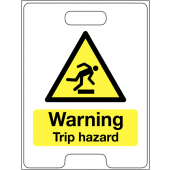
- As you are looking for trip hazard signage you may also be interested in the Warning Trip Hazard Floor Stands
- A similar choice of signage for warning of trip hazards are the Caution Trip Hazard Stanchion Signs
- View more choices of trip hazard signs