We use cookies to make your experience better. To comply with the new e-Privacy directive, we need to ask for your consent to set the cookies. Learn more.

Do Not Operate Signs
£5.99
In stock
SKU
PR005U*
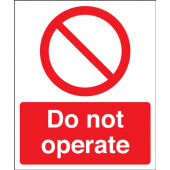
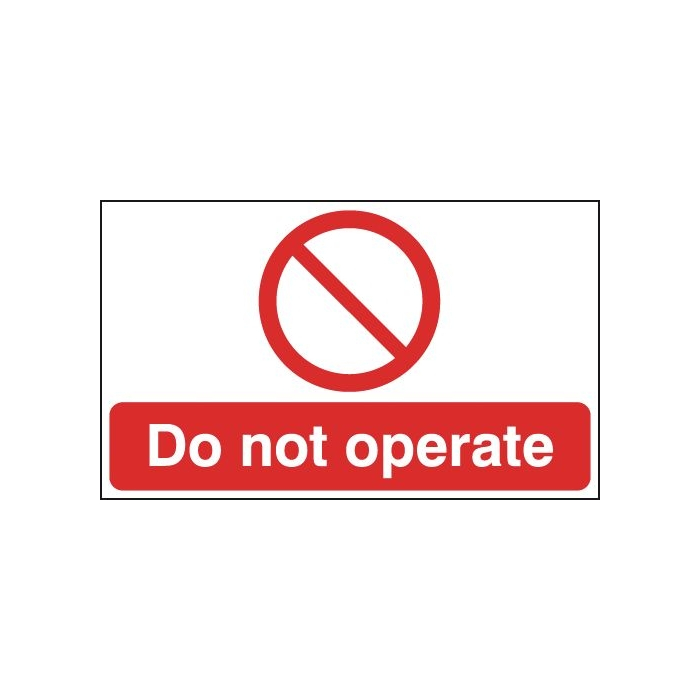
Use Do Not Operate Signs for displaying around areas where there is a need to stop people from operating equipment or machinery and Do Not Operate Signage conveys the message "Do not operate" which clearly means everyone is not allowed to operate the machinery or equipment.
Do Not Operate Signs
Do Not Operate Signs are designed for promoting safety and preventing unauthorised operation of equipment or machinery. These signs serve as a clear visual warning effectively communicating that specific equipment or machinery is not to be operated under any circumstances.
Do Not Operate Signs feature bold text and easily recognisable graphics making them highly visible and easily understood. By prominently displaying these signs near the equipment or machinery in question you provide a strong and unmistakable message that unauthorised operation is strictly prohibited helping to prevent accidents and potential injuries.
The benefits of Do Not Operate Signs extend beyond mere communication. These signs act as a deterrent, reminding individuals of the potential risks and dangers associated with operating specific equipment or machinery without proper authorisation or training. By visibly displaying these signs you actively contribute to creating a safer work environment and reducing the likelihood of accidents or damage to equipment.
Durability is a key feature of our signs. Constructed from high-quality materials they are designed to withstand various environmental conditions including exposure to harsh weather, chemicals and UV rays. This ensures that our Do Not Operate Signs remain intact and highly visible over time maintaining their effectiveness in preventing unauthorised operation.
One of the significant advantages of Do Not Operate Signs is their versatility and ease of installation. These signs can be easily mounted on walls, doors or other appropriate surfaces near the equipment or machinery in question. By using these signs consistently and visibly you establish a standardised system that reinforces safety protocols, preventing unauthorised operation and promoting a culture of responsible and safe practices.
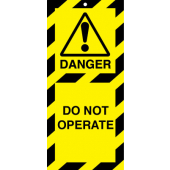
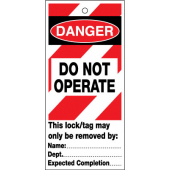
A Do Not Operate Sign is a prohibition message type of restriction sign which is used for being mounted around areas where there is a need to stop people from operating equipment or machinery and Do Not Operate Signage conveys the message "Do not operate" which means everyone is not allowed to operate the machinery or equipment. Where equipment or machinery is out of order displaying the do not operate out of order signs will prohibit others from trying to operate the equipment or machinery and for warning others of dangers from broken down equipment or machinery displaying the danger do not operate lockout tags are supplied in packs of 10 complete with cable ties.
Do Not Operate Signs Specifications
- View the full range of machinery prohibition signs
- View our complete range of prohibition do not operate signs
- Ensures compliance under the latest signs & signals regulations
- Display area Indoor and Outdoor
- Colour - Background Red
- Colour - Text White
- Features - Write On No
- Finish High gloss
- Orientation Landscape
- Photoluminescence Non Photoluminescent
- Shape Rectangle
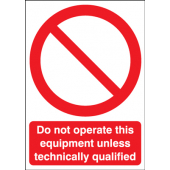
- Sign/Symbol General Prohibition
- Sign Text/Symbol Symbol and Text
- Sign Type Prohibition
- Supplied in Single
- Text Do Not Operate
- As you are looking to buy signage for machinery you may also be interested in the Do Not Use Out Of Order Signs
- A similar choice of signage for machinery are the Do Not Switch On Signs
- View more choices of do not operate signs