We use cookies to make your experience better. To comply with the new e-Privacy directive, we need to ask for your consent to set the cookies. Learn more.

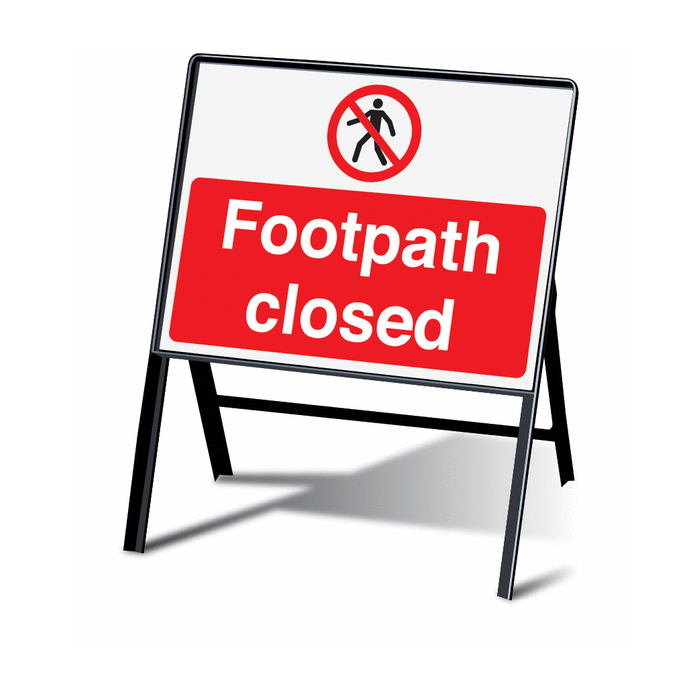
Footpath Closed Stanchion Sign
Footpath Closed Stanchion Sign is a freestanding pedestrian control sign used when you need to block an unsafe or unavailable walking route. It helps facilities teams, contractors and site managers give clear closure instructions at paths, entrances, walkways and temporary works areas.
Where Footpath Closed Stanchion Signs Should Be Positioned
You should install this sign at the start of the closed route, before people commit to the path. Place it where the message is seen naturally on approach, such as walkway entrances, site paths, public access edges, temporary works areas and building approach routes.
Viewing Distance Guidance for This Temporary Footpath Sign
Use the sign where people have enough time to stop or choose another route. For busy pedestrian approaches, keep the sign clear of clutter and place it in the direct line of travel, normally within a practical viewing range of around 10–18 metres.
| Size option | Suggested viewing use | Best suited to |
|---|---|---|
| H 450 x W 600 mm | Approx. 10–18 metres, subject to site lighting and approach speed | Footpaths, temporary closures, public access routes and work areas |
Expected Results After Using a Footpath Closed Stanchion Sign
Once positioned correctly, this sign helps people stop before entering a closed pedestrian route, understand that access is restricted and choose a safer alternative before reaching the hazard or obstruction.
Footpath Closed Stanchion Sign Specifications
- Sign message: Footpath closed
- Purpose: closes unsafe pedestrian routes
- Where to use: indoor and outdoor access areas
- Sign type: prohibition
- Pictogram: no pedestrians symbol
- EN ISO 7010 code: P004
- Conforms to EN ISO 7010 pictogram use
- Supports BS 5499 safety sign layout practice
- Material: rigid foam plastic
- Material thickness: 3 mm
- Size: H 450 x W 600 mm
- Orientation: landscape
- Shape: rectangle
- Background colour: red and white
- Text colour: white
- Symbol colours: red and black
- Finish: satin
- Fixing method: attach to stanchion frame
Practical Set-Up Guidance for Footpath Closure Control
❌ Placing the sign too close to the hazard for people to react
❌ Leaving the sign side-on to the direction of pedestrian travel
❌ Using it without checking that an alternative route is obvious
❌ Do not rely on it alone for traffic management on live roads
❌ Do not use it where pedestrians need detailed diversion instructions
❌ Do not place it where wind, doors or equipment can knock it aside
✅ Face the sign towards approaching pedestrians at eye-catching angles
✅ Position it before the decision point so people can change route safely
✅ Recheck placement during the day if works, crowds or access routes move
Footpath Closed Stanchion Sign questions answered
What is a Footpath Closed Stanchion Sign used for? It is used to show that a pedestrian route is closed and that people should not continue along that path.
Can this sign be used outside? Yes, it is designed for indoor and outdoor display areas, provided it is secured correctly to a suitable stanchion frame.
Is this suitable for permanent pedestrian route closures? It is better for temporary or changeable closures. For permanent access changes, you should consider fixed signage and route planning.
Does the pictogram follow a recognised standard? Yes, the no pedestrians pictogram is EN ISO 7010 P004, helping the message stay clear even when people read the text quickly.
Where should I place a footpath closed sign? Place it at the approach point before the closed path starts, not after the hazard, obstruction or restricted section.
Footpath Closed Stanchion Sign Features and Benefits
- ✓ Freestanding format for temporary path closure control
- ✓ Large H 450 x W 600 mm landscape display
- ✓ Red prohibition layout with no pedestrians pictogram
- ✓ Satin rigid foam plastic sign face for everyday site use
- ✓ Helps you block access without permanent fixing
- ✓ Makes closure instructions easier to see on approach
- ✓ Reduces the chance of pedestrians entering unsafe areas
- ✓ Gives staff and visitors a clear decision before they proceed
Related signs for closed pedestrian routes
For a broader temporary stop message, choose no access stanchion signs where people should not pass beyond a barrier. Useful for works, closures and restricted entrances.
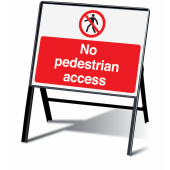
If the closure is specifically for pedestrians, compare no pedestrian access stanchion signs for a clearer walking restriction. Good for path diversions, repairs and changing site layouts.
Where a fixed sign is needed, use no thoroughfare route closure signs to prevent people using a blocked route. Suitable for corridors, passages and controlled walkways.
For multiple closure points, consider no thoroughfare multipack signs across several routes. Helpful when the same restriction appears in more than one area.
For more route restriction options, browse footpath and pedestrian prohibition signs before setting out barriers. This helps you choose wording that matches the route closure.
Estimated Delivery Day
Current date and time:
Estimated delivery by:
Based on an estimated 3 working day delivery timeframe from today, excluding weekends and bank holidays. Delivery dates are provided as a guide only and may vary depending on the product ordered, stock availability at the time of purchase, production or printing lead times.