We use cookies to make your experience better. To comply with the new e-Privacy directive, we need to ask for your consent to set the cookies. Learn more.

No Exit Signs
£7.25
In stock
SKU
FE052A5*
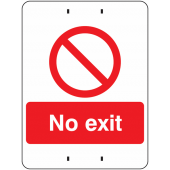
No Exit Signs are designed for mounting and displaying in and around areas where there is a need to stop and prohibit people from being able to exit conveys the message "No exit" which means no exit is allowed by the specific route of where the sign is positioned.

No Exit Signs
No Exit Signs are a crucial component of any safety signage system designed to clearly mark areas where exit is prohibited. These signs play a vital role in ensuring the safety and security of individuals by clearly communicating that an exit is not available in a specific location. By prominently displaying No Exit Signs you can effectively prevent confusion, minimise potential hazards and direct people to alternative exit routes when necessary.
The primary benefit of No Exit Signs is their ability to convey the message that an exit is not accessible. These signs feature bold text and universally recognised symbols instantly communicating that the chosen pathway does not lead to an exit. By clearly marking these areas you eliminate any confusion or potential accidents that may occur due to individuals attempting to use the pathway as an exit.
No Exit Signs are crafted from high-quality, durable materials ensuring long-lasting performance. Whether installed indoors or outdoors these signs are designed to withstand various environmental conditions including exposure to sunlight, moisture and harsh weather. This durability ensures their visibility and legibility over time providing a reliable means of clearly marking areas where exit is not available.
By prominently displaying No Exit Signs you contribute to overall safety and emergency preparedness within your premises. These signs play a crucial role in guiding people to alternative exit routes in the event of an emergency or evacuation. By clearly indicating that an exit is not accessible individuals can quickly and safely navigate towards an alternative exit point reducing the risk of congestion and facilitating a more efficient evacuation process.
Investing in No Exit Signs demonstrates your commitment to safety and compliance. By clearly marking areas where exit is prohibited you create a safer environment and help ensure individuals can navigate your premises effectively during emergency situations. These signs are easy to install and provide a highly visible indication that guides people away from potential hazards, ultimately contributing to a safer and more secure space.
A No Exit Sign is a prohibition message type of restriction sign which has been designed for mounting and displaying in and around areas where there is a need to stop and prohibit people from being able to exit somewhere and the sign conveys the message "No exit" which means no exit is allowed by the specific route of where the sign is positioned. No exit signs in packs of 6 are ideal for prohibiting entry to people around a number of different locations in buildings and no exit labels can be used indoors or outdoors when adhered to smooth dry surfaces such as door which have no exit.
No Exit Signs Specifications
- View the full range of no exit prohibition signs
- You may also be interested in the Prohibition No Exit Signs
- A similar choice are the No Exit Stanchion Signs
- Ensures compliance under the latest signs & signals regulations
- Display area Indoor and Outdoor
- Colour - Background Red
- Colour - Text White
- Features - Write On No
- Finish High gloss
- Orientation Portrait
- Photoluminescence Non Photoluminescent
- Shape Rectangle
- Sign/Symbol General Prohibition
- Sign Text/Symbol Symbol and Text
- Sign Type Prohibition
- Supplied in Single
- Text No Exit
- Orientation Portrait
- View more choices of no exit signs