We use cookies to make your experience better. To comply with the new e-Privacy directive, we need to ask for your consent to set the cookies. Learn more.

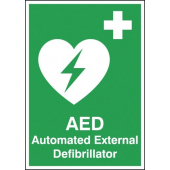
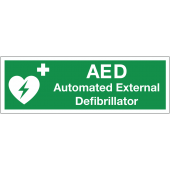
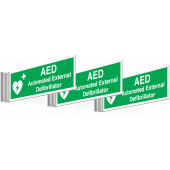
AED Automated External Defibrillator Corridor Sign
£47.99
In stock
SKU
FA002LFPA
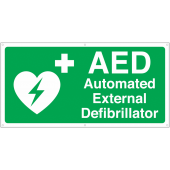
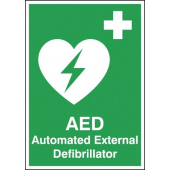
AED Automated External Defibrillator Corridor Signs are used for being mounted in corridors or onto walls and conveys the message "AED Automated External Defibrillator" to highlight the location of the Automated External Defibrillator.
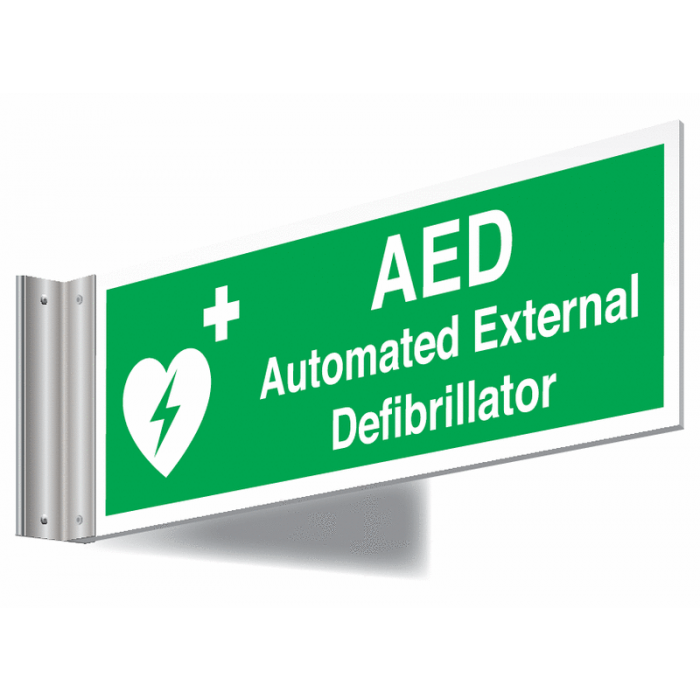
AED Automated External Defibrillator Corridor Sign
An AED Automated External Defibrillator Corridor Sign is a first aid type of double sided sign which is used for being mounted in corridors or onto walls and conveys the message "AED Automated External Defibrillator" which means to highlight the location of the Automated External Defibrillator, an AED Automated External Defibrillator Corridor Sign is double sided so wherever it is mounted the message can be visible from both sides and the wall brackets are pre-drilled for easy fixing.
AED Automated External Defibrillator Corridor Sign Specifications
- View the full range of first aid double sided corridor signs
- View the complete range of AED defibrillator signs
- Made from high quality 3mm foamed plastic, AED sign is lightweight yet durable
- Printed on both sides, this first aid sign is clearly visible
- Clearly identify the location of your AED equipment to avoid delays in an emergency
- Wall brackets are pre-drilled for easy fixing
- Fixings supplied separately
- All symbols, where applicable, conform to ISO 7010
- Application Area Indoor
- Finish Smooth Matte
- Fixing Bolted
- Material 0.2mm PVC Plastic
- Orientation Landscape
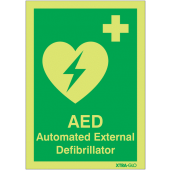
- Photoluminescence Non Photoluminescent
- Shape Rectangle
- Sign/Symbol Automated External Defib
- Sign Text/Symbol Symbol and Text
- Sign Type First Aid
- Size (H x W) 150 x 450 mm
- Size2 3 mm
- Double-sided for better visibility
- Supplied in Single
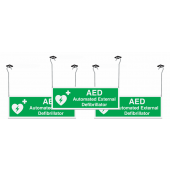
- You may also be interested in the AED Defibrillator Double Sided Hanging Signs
- A similar choice of signs are the AED Automated External Defibrillator Banner Signs
- You may also be interested in the Emergency Shower Double Sided Corridor Signs
- A similar choice of signs are the First Aid Corridor Signs
- View more choices of signs for AED defibrillators