We use cookies to make your experience better. To comply with the new e-Privacy directive, we need to ask for your consent to set the cookies. Learn more.

Wheelchair Access At Side Of Building Signs
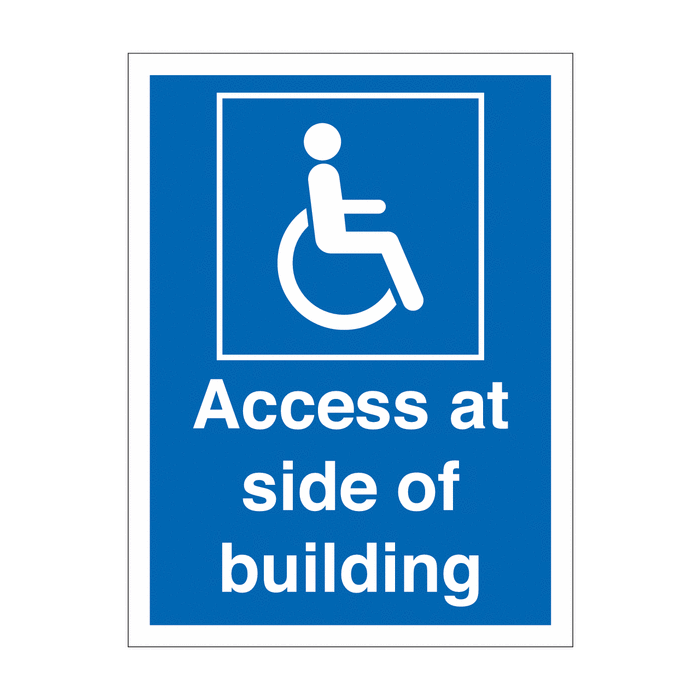
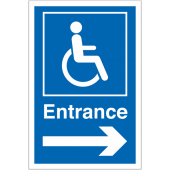
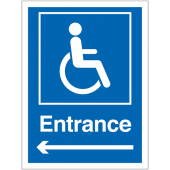
Wheelchair Access At Side Of Building Signs guide visitors and wheelchair users towards the correct accessible entrance. Featuring the recognised wheelchair symbol and clear message, this sign improves building navigation in workplaces, hospitals, schools and public facilities where the accessible entrance is positioned at the side.
Where & How to Use this sign
This accessibility direction sign is installed where the main accessible entrance is located at the side of a building. It is commonly positioned near parking areas, pedestrian routes and building approaches to guide wheelchair users and visitors safely towards the correct accessible entry point.
Accessibility Benefits After Installation
- ✓ Visitors locate accessible entrances more quickly
- ✓ Wheelchair users follow clear access routes
- ✓ Reduced confusion when approaching large buildings
- ✓ Clearer navigation from car parking areas
- ✓ Improved accessibility guidance for public facilities
- ✓ Better inclusive access for mobility-impaired visitors
Specifications
- Conforms to BS 5499
- Material options: Rigid plastic or polycarbonate
- Size option: H 400 × W 300 mm
- Alternative size: H 600 × W 400 mm
- Orientation: Portrait
- Finish: High gloss
- Background colour: Blue
- Text colour: White
- Symbol colour: White
- Pictogram: Wheelchair accessibility symbol
- Message text: Access At Side Of Building
- Sign supplied individually
- Photoluminescence: None
- Reflectivity: Non-reflective
- Display suitability: Indoor and outdoor
- Fixings supplied separately
- Sign category: Accessible entrance direction
- Application: Accessible building navigation
Installer Guidance for Accessible Entrance Direction Signs
- ❌ Installing too close to the entrance turning point
- ❌ Placing behind parked vehicles or obstacles
- ❌ Mounting where approaching visitors cannot see the sign early
- ❌ Buildings where the accessible entrance is directly ahead
- ❌ Locations requiring directional arrow signage instead
- ❌ Indoor corridors where entrance direction is obvious
- ✅ Install along pedestrian approach routes
- ✅ Position before building entrance junctions
- ✅ Combine with accessible parking signs nearby
Customers frequently asked questions
What is a wheelchair access at side of building sign used for? It informs visitors and wheelchair users that the accessible entrance to the building is located at the side rather than the main front entrance.
Where should wheelchair access direction signs be installed? They are typically installed along pedestrian routes, near parking areas and building approaches where visitors need clear guidance towards accessible entrances.
Do wheelchair access signs follow recognised safety standards? Yes, the design follows BS 5499 guidance for safety signage used in workplaces and public buildings.
Are wheelchair access direction signs suitable for outdoor use? Yes, the durable materials allow installation outside buildings where visitors approach from car parks or pedestrian walkways.
Why are accessible direction signs important for buildings? They help ensure wheelchair users and mobility-impaired visitors can easily locate the correct entrance without unnecessary detours.
Features & Benefits
- ✓ Clear wheelchair accessibility symbol
- ✓ Highly visible blue accessibility design
- ✓ Durable rigid plastic or polycarbonate material
- ✓ Large portrait format for improved visibility
- ✓ Suitable for indoor and outdoor installation
- ✓ Helps visitors locate accessible entrances quickly
- ✓ Improves navigation around larger buildings
- ✓ Supports inclusive building access guidance
- ✓ Reduces confusion for first-time visitors
- ✓ Reinforces accessible route navigation
Useful access signs for side routes and step-free entrances
When the route includes a ramp, use a simple ramped access sign to confirm the step-free approach. Helpful for visitors approaching from car parks, pavements or external paths.
If the accessible route continues behind the premises, add rear accessible entrance signs so people do not stop at the wrong side door. Useful for buildings with service yards or rear visitor access.
To plan the full route, compare accessible property route signs across the wider range. This helps you match side access, ramp access and doorway identification clearly.
Where visitors need to turn right towards the entrance, combine this with an accessible entrance arrow right sign for more precise direction. Ideal for paths, corridors and approach routes with more than one option.
For the final doorway, place clear disabled entrance signs where visitors need immediate reassurance. A practical choice for healthcare, education, hospitality and workplace entrances.
Estimated Delivery Day
Current date and time:
Estimated delivery by:
Based on an estimated 3 working day delivery timeframe from today, excluding weekends and bank holidays. Delivery dates are provided as a guide only and may vary depending on the product ordered, stock availability at the time of purchase, production or printing lead times.